7 Reasons Your Treatment Plan Might Include a Bone Graft for Dental Implants in Washington, DC
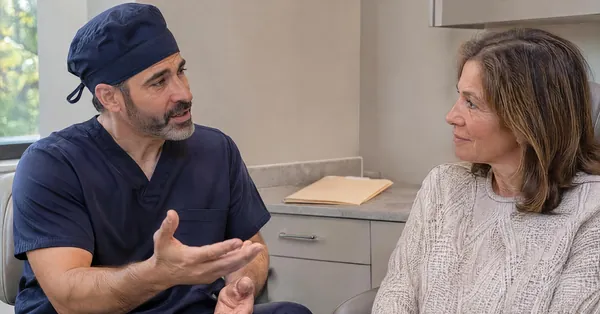
Planning for a dental implant is more than choosing a replacement tooth. Your surgeon also has to confirm that the jawbone can hold an implant securely in the exact position needed for a stable, long-lasting bite. In Washington, DC, that planning step is often where patients first hear the words "bone graft." A graft is not automatically required, but it is commonly recommended when the bone is not ideal for predictable implant support.
TL;DR - Why Bone Grafting Often Comes Up During Implant Planning
For many people considering dental implants in Washington, the decision to add grafting comes down to anatomy, timing, and risk reduction. Imaging and a careful exam help your surgeon decide whether a bone graft in Washington is likely to improve stability and long-term results.
- Bone height and width must match the implant size and ideal position.
- Time since tooth loss matters because the jaw can shrink after an extraction.
- Past infection or gum disease can change bone quality and healing.
- Extraction-site preservation may be recommended to protect the ridge.
- Sinus or nerve proximity can require added bone to keep the plan safe.
If you are exploring dental implants in Washington, this article focuses on the practical decision triggers that can make grafting more (or less) likely.
In our previous blog, "Bone Graft or Sinus Lift? How Surgeons Decide," we explained how surgeons choose between those two approaches. In this article, we focus on the broader set of reasons bone grafting may be recommended as part of implant planning.
What an Oral Surgeon Evaluates Before Dental Implants in Washington
Before recommending an implant (or a graft), an oral surgeon evaluates the implant site in three dimensions: how tall the bone is, how wide it is, and how the site relates to nearby anatomy. Cone beam imaging, when indicated, can reveal details that are not obvious on a basic exam.
One clinical observation our team sees often is that patients feel surprised by the word "graft" because the gum tissue can look healed on the surface even when the underlying ridge has narrowed after tooth loss.
7 Reasons Your Implant Plan Might Include a Bone Graft
1) The Ridge Is Too Narrow for the Implant You Need
An implant needs enough bone around it for support. If the ridge is thin, placing an implant without addressing the deficiency can increase the risk of compromised positioning or reduced long-term stability. In these cases, a graft may be recommended to build width and help support ideal implant placement.
2) There Is Not Enough Bone Height in the Intended Area
Bone height can be limited for several reasons, including natural anatomy or changes after tooth loss. If the bone is too short for safe placement, grafting may be used to help create a safer foundation and reduce the chance of complications around critical structures.
3) It Has Been a While Since the Tooth Was Lost
After an extraction, the jawbone in that area can gradually shrink. The longer a space is left untreated, the more likely there may be less bone available for an implant. This is one of the most common reasons patients considering replacement later are told that grafting may help.
4) The Extraction Site Needs Preservation for Future Implant Placement
Sometimes the best time to protect bone is right at the time of extraction. Ridge preservation (often called socket grafting) may be recommended to reduce collapse of the site and keep future implant options open.
5) A Prior Infection or Inflammation Affected the Bone
Teeth that were lost due to infection, inflammation, or advanced decay can leave behind compromised bone. Your surgeon may recommend grafting to rebuild a healthier foundation before committing to implant placement.
6) The Implant Site Is Close to the Sinus (Upper Back Teeth)
In the upper jaw, the sinus cavity can limit available bone height. If the sinus sits low, your surgeon may recommend a grafting approach to create safer space for the implant and avoid violating the sinus. (A sinus lift is one specific technique, but not every case near the sinus requires that exact procedure.)
For an overview of grafting approaches and when they are used, see our bone grafting service page.
7) The Surgeon Wants to Reduce Risk by Improving Implant Stability
Even when an implant could possibly be placed without grafting, your surgeon may recommend a bone graft to improve predictability, position, and support. In straightforward terms: sometimes grafting is about lowering risk and making the plan more stable, not just "fixing" a severe deficiency.
Questions to Bring to Your Consultation
A consultation should leave you with clarity about why grafting is recommended (or not) in your specific case. Consider asking:
- What did you see on imaging that makes grafting necessary or helpful?
- Is the issue height, width, or both at my implant site?
- What are my options if I prefer to avoid grafting?
- Could the graft be done at the same time as the implant, or should it be staged?
- How will this affect the final tooth position and bite?
How Imaging Can Change the Plan (And Why That Is a Good Thing)
Many implant decisions come down to what imaging reveals below the gums. Detailed imaging can help identify bone contours, hidden defects, and proximity to sinuses or nerves. That information helps your surgeon recommend a plan that prioritizes safety and long-term stability.
If you are also thinking about comfort during treatment, our page on sedation dentistry in Washington, DC explains common options and safety considerations.
FAQs
Not necessarily. A bone graft is often recommended to improve the foundation for an implant. Whether you are a candidate depends on your overall health, the condition of your gums and bone, and the specific implant site.
The decision is based on clinical findings and imaging. Surgeons evaluate bone height and width, the quality and density of the bone, and the position of nearby anatomy like the sinus and important nerves.
Sometimes, yes. In other situations, grafting needs to be done first so the area can rebuild enough bone before an implant is placed. Your surgeon will recommend the safest sequence based on your anatomy and treatment goals.
Bring a list of medications, your medical history, and any prior dental records or imaging you have. It also helps to bring questions about grafting options, sedation choices, expected appointments, and follow-up care.
No. A sinus lift is a specific procedure used when implants are planned in the upper back jaw and the sinus is close to the implant site. Other bone grafts may be used in many different areas of the mouth for different reasons.
Related Reading
- Dental Implants in Washington, DC
- Bone Grafting in Washington, DC
- Are You a Good Candidate for Dental Implants? A DC Checklist
- How Long Does a Bone Graft Take to Heal Before Dental Implants in Washington, DC?
- Dental Implants vs Bridges vs Dentures: A Washington, DC Guide
Conclusion
The goal of implant planning is a replacement tooth that looks natural and functions well, with a foundation that supports it long term. If your treatment plan includes grafting, it is usually because the surgeon is responding to specific, measurable findings such as ridge width, bone height, infection history, or nearby anatomy.
If you are considering dental implants in Washington and want a clear, patient-friendly explanation of your options, schedule a consultation with Dr. Tania Nkungula, DDS.
Ready to take the next step? Call ORAL SURGERY DC at (202) 610 0600 to book a consultation.





5 Stars
based on 11 reviews
5 Stars
based on 11 ratings