Dental Implants vs Bridges vs Dentures: A Washington, DC Guide
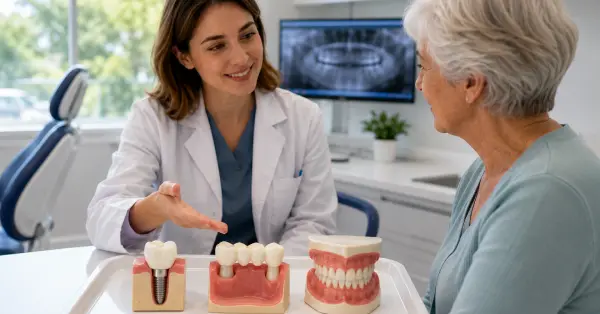
If you are replacing one tooth or several teeth, the choice often comes down to three options: dental implants, bridges, or dentures. Each can restore your smile, but they differ in how they feel, how they impact nearby teeth, and how they hold up over time. This guide is designed for comparison shoppers researching dental implants in Washington, DC and weighing alternatives in a clear, practical way.
TL;DR - How To Choose the Right Tooth Replacement
Choose based on what matters most to you: stability, preserving nearby teeth, long-term maintenance, and whether you want a removable or fixed solution.
- Implants are fixed, don't rely on neighboring teeth, and can help support jawbone health.
- Bridges are fixed and can be faster in some situations, but they involve supporting teeth.
- Dentures are removable and can replace multiple teeth, but may shift and need adjustments.
- Bone loss matters; some implant plans may require a bone graft to create stable support.
- Your comfort matters; sedation options may help if anxiety is a barrier to care.
In our experience, patients feel most confident after they stop asking, "What's the best option?" and start asking, "What's best for my priorities and mouth?" That is the mindset this article supports.
A Quick Definitions Refresher (In Plain English)
- Dental implant: a small post placed in the jawbone that supports a crown, bridge, or denture.
- Dental bridge: a fixed replacement tooth (or teeth) that is supported by neighboring teeth.
- Denture: a removable appliance that replaces multiple teeth (partial or full).
Comparison Framework: What Matters Most to You?
1) Stability and Chewing Confidence
If you want something that feels closest to a natural tooth, implants are typically the most stable option because they anchor into the jaw. Bridges are also fixed and can feel secure, but their support comes from adjacent teeth rather than bone. Dentures can work well, especially for replacing many teeth, but some people notice movement during chewing.
2) Preserving Nearby Teeth
A key difference is whether the solution depends on neighboring teeth. Implants can replace a missing tooth without using adjacent teeth for support. A traditional bridge usually requires reshaping the teeth on either side so they can hold crowns that support the bridge.
3) Long-Term Bone Health
After tooth loss, the jawbone in that area can gradually shrink because it is no longer stimulated by a tooth root. Implants can help address this by restoring function in the bone. Bridges and dentures replace teeth above the gumline, but do not stimulate bone the same way.
4) Surgery Comfort Level and Anxiety
Implants involve a surgical procedure. If you are anxious about dental treatment, it helps to know you may have comfort options. Our sedation dentistry in Washington, DC page explains common approaches and how teams plan for safety.
5) Maintenance and Daily Life
- Implants: you clean them like teeth (plus any implant-specific tools your dentist recommends).
- Bridges: you will likely need to clean under/around the bridge carefully; flossing tools can help.
- Dentures: you remove them for cleaning; some people need adhesives, adjustments, or relines.
Dental Implants in Washington, DC: Who Is a Good Fit?
People often lean toward implants when they want a fixed solution that does not depend on neighboring teeth. Implants can replace one tooth, several teeth, or support more comprehensive solutions.
- You want a fixed option that feels stable during chewing.
- You want to avoid altering adjacent teeth when replacing a single tooth.
- You are thinking long-term and want a solution designed for durability and function.
- You have enough bone, or you are open to rebuilding it if needed.
For a deeper overview of the procedure, benefits, and risks, see our service page on dental implants in Washington, DC.
Bone Grafting Decision Point
Some people are surprised to learn that the implant decision is sometimes also a bone decision. If the jawbone is too thin or has changed since the tooth was lost, a bone graft in Washington, DC may be recommended to create more stable support for an implant.
Dental Bridges: Who Might Prefer a Bridge?
Bridges can be a good fit when you want a fixed replacement but do not want implant surgery, or when the supporting teeth already need crowns for other reasons. The tradeoff is that bridges rely on nearby teeth for support.
- You want a fixed tooth replacement without implant surgery.
- The teeth next to the gap already need crowns and can serve as supports.
- You prefer a treatment plan that may have fewer surgical steps (depending on your case).
Dentures: When Removable May Be the Right Call
Dentures can replace multiple missing teeth and are a common option when budget, medical history, or anatomy makes surgery less appealing. Some patients also choose dentures as a transitional step while considering longer-term solutions.
- You are missing multiple teeth and need broad replacement.
- You prefer a removable option or need flexibility.
- You want a non-surgical approach or are not an ideal surgical candidate.
How To Decide in Real Life: 7 Questions To Bring to Your Consultation
- How many teeth am I replacing, and are they next to each other?
- What condition are the teeth next to the gap in?
- How much bone do I have in the area, and do you expect bone rebuilding?
- What will feel most stable for chewing based on my bite?
- What is the maintenance plan for each option (cleaning tools, follow-ups, adjustments)?
- What comfort options are available if I am nervous?
- What is the estimated timeline for each option in my situation?
If you are planning a first appointment, our first visit page outlines what to expect so you can feel prepared.
In our previous blog, "What to Expect: Pre, During, & Post Bone Grafting in Washington," we discussed how bone grafting is planned and what recovery can look like. In this article, we focused on how grafting fits into the bigger decision of implants vs bridges vs dentures.
FAQs
In general, dental implants are designed for long-term function, bridges can also last many years but may need replacement, and dentures often require periodic adjustments or remakes over time. Your best estimate depends on bite forces, hygiene, and how much supporting bone and gum tissue you have.
Yes. Because an implant is anchored in the jaw, it can help maintain bone in the area by restoring function where the natural tooth root used to be. Bridges and dentures replace the visible tooth but do not stimulate the jawbone in the same way.
A bone graft may be recommended when the jawbone is too thin or has shrunk after tooth loss, infection, or trauma. A bone graft in Washington, DC can help rebuild support so an implant has a stable foundation. Your surgeon confirms this with an exam and imaging.
Many patients can benefit from sedation options for a calmer experience, especially if they feel anxious or anticipate a longer visit. Your surgeon will review your medical history and discuss which sedation approach is appropriate for you and how to prepare safely.
Sometimes, yes. A bridge may be a good fit if the neighboring teeth already need crowns, and a denture can be a practical option when multiple teeth are missing or when surgery is not the right choice. The best option is the one that fits your health, timeline, comfort level, and long-term goals.
Related Reading
Conclusion: The Best Choice Is the One You Can Live With Daily
Implants, bridges, and dentures all solve the problem of missing teeth, but they solve it in different ways. The most helpful next step is a consultation where your jawbone, bite, and goals are evaluated, so you can choose a plan you feel good about long after the appointment is over.
Schedule a Tooth Replacement Consultation
If you are comparing options for missing teeth and want guidance from an oral surgery perspective, Dr. Tania Nkungula and our team at ORAL SURGERY DC are here to help. Call (202) 610 0600 to schedule your visit.
If you are ready to book, you can review our appointment scheduling information.




5 Stars
based on 11 reviews
5 Stars
based on 11 ratings