Bone Graft or Sinus Lift? How Surgeons Decide for Implants
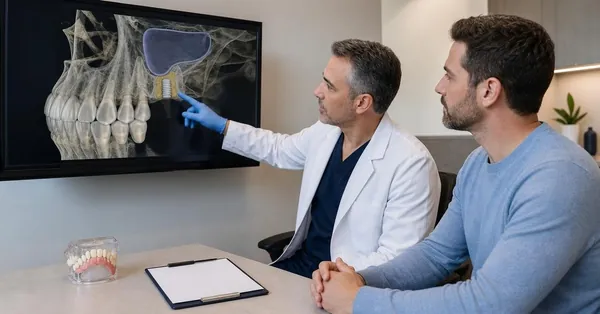
If you are exploring Bone Grafting Washington patients commonly ask about, you may also see another term: a "sinus lift." Both procedures can be part of implant-site preparation, but they solve different problems. The key is not which one sounds better, it is which one fits your upper jaw anatomy and implant plan.
In our previous blog, "What to Expect: Pre, During, & Post Bone Grafting in Washington," we discussed the general flow of a bone graft visit and recovery. In this article, we focus on the decision framework oral surgeons use when choosing between a bone graft and a sinus lift.
TL;DR - The Choice Depends on Bone Height vs. Sinus Space
For upper-jaw implants, the biggest question is whether you need more bone width, more bone height under the sinus, or both. Imaging and your implant goals guide the plan.
- Bone grafting commonly rebuilds jawbone width or fills areas of bone loss.
- A sinus lift is considered when there is not enough upper back jawbone height under the sinus.
- 3D imaging helps evaluate bone dimensions and nearby structures before implant placement.
- Your timeline may differ depending on whether grafting and implant placement can be staged or combined.
- Ask why a specific procedure is recommended and what success looks like in your case.
Why These Procedures Come Up in Dental Implant Planning
Dental implants need stable bone support. After tooth loss, the jawbone can shrink over time, and in the upper back jaw the sinus sits above the molar and premolar roots. When bone volume is limited, an oral surgeon may recommend grafting to create a safer foundation for dental implants in Washington, DC.
A helpful way to think about it: a bone graft often addresses the ridge (the bony "platform"), while a sinus lift addresses the space above the ridge where the sinus is close to the implant site.
Bone Grafting Washington Patients Hear About: What Problem Is It Solving?
"Bone grafting" is a broad term. In everyday language it means adding bone (or bone-like material) where your jaw needs more support. Clinically, it is often recommended to improve one or more of the following:
- Ridge width: if the jaw is too thin to hold an implant in a stable position.
- Ridge height: if there is general bone loss in an area that needs rebuilding.
- Socket preservation needs: after an extraction, to help maintain the ridge shape for a future implant.
- Defects from infection or trauma: when bone has been damaged and needs reinforcement.
Our team has found that many patients who feel "fine" after losing a tooth are surprised by how quickly bone shape can change. That is one reason we emphasize planning: the earlier implant-site development is considered, the more options you may have.
When a Sinus Lift Is the Better Fit (And Why It Is Different)
A sinus lift is typically discussed for implants in the upper back jaw. The goal is to create more room for bone in the area beneath the sinus so the implant has adequate support. Instead of widening the ridge, the focus is on the vertical bone height between the ridge and the sinus.
This is why competitor pages often mention "sinus lift" right alongside bone grafting: both are considered implant-site preparation, but they apply to different anatomical limitations.
The Surgeon Decision Framework: What We Evaluate Before Recommending One Option
At ORAL SURGERY DC, Dr. Tania Nkungula and our team look at a combination of anatomy, function, and your implant goals. Here are the common decision points we explain in consultations:
1) Where Is the Implant Going?
Upper molars and premolars are where the sinus is most relevant. Front-tooth implants may involve grafting for contour and support, but sinus lift planning is typically an upper back-jaw conversation.
2) Do You Need Bone Width, Bone Height, or Both?
- If the ridge is too thin, a bone graft to widen the ridge may be recommended.
- If there is not enough height under the sinus, a sinus lift may be considered.
- If both are limited, the plan may involve staged steps.
3) What Does 3D Imaging Show?
3D planning (often discussed as "CBCT-style" imaging) helps visualize bone contours and proximity to structures like the sinus and nerves. If you would like background on imaging safety, our related post How Safe Are Dental X-Rays? is a useful read.
4) Bone Quality and Healing Factors
Beyond measurements, bone density and overall health factors influence the safest approach and timing. Some patients do better with a staged plan to allow predictable healing before implant placement.
5) Your Restoration Goals (Single Tooth vs. Larger Plan)
A single implant may have different requirements than a multi-tooth plan. For patients comparing replacement options, our article Implants vs Bridges vs Dentures: DC Choice Guide can help you think through the big picture.
What to Ask Your Oral Surgeon at the Consultation
Comparison-style searches can make it sound like there is a universal winner. In reality, the best plan is the one that matches your anatomy and lowers risk. Consider asking:
- What is the limiting factor in my case? (bone width, bone height, sinus position, or something else)
- Is the recommendation staged or same-day with implant placement?
- How will you confirm healing before moving forward?
- What aftercare is most important for this specific procedure?
- What symptoms are normal, and what is a red flag?
For general post-op guidance across procedures, you can also review our Surgical Instructions page before your visit.
FAQs
Related Reading
- Bone grafting services
- Dental implants services
- The Role of Bone Grafting for Dental Implants
- Implants After Bone Loss? Candidacy Guide
Conclusion: The Right Option Is the One That Fits Your Anatomy
When patients compare bone grafting and sinus lifts, they are really asking a smart question: "What needs to be rebuilt so my implant is stable?" The answer depends on whether the challenge is ridge width, height under the sinus, or both. A consult with imaging-based planning helps turn a confusing choice into a clear, personalized plan.
Schedule a Consultation
If you are considering implant-site preparation and want guidance on whether a bone graft or sinus lift fits your needs, our team at ORAL SURGERY DC can help you understand your options. Call (202) 610 0600 to schedule a consultation.





5 Stars
based on 11 reviews
5 Stars
based on 11 ratings