Dental Implants After Bone Loss: A Candidacy Guide
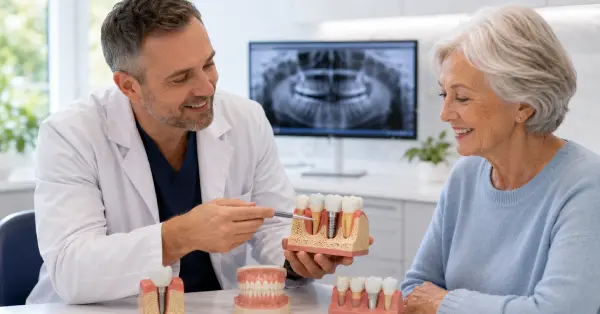
If you have been told you have bone loss, it is normal to wonder whether dental implants are still possible, or whether you will automatically need a different solution. The short answer is that bone loss can change the plan, but it does not always remove you from consideration. This candidacy guide is designed for people researching dental implants in Washington, DC who want to understand the decision points before scheduling a consultation.
TL;DR - How Bone Loss Affects Implant Candidacy
Bone loss matters because implants need stable bone support. The evaluation focuses on how much bone is available, where it is missing, and whether bone grafting may help create a safer foundation for an implant.
- Bone loss is common after tooth loss and can change implant timing and technique.
- Imaging and measurements guide the plan, including implant size and position.
- Bone grafting may be discussed when more support is needed for stability.
- Health history matters because healing and infection risk affect candidacy.
- A focused consult is the fastest way to get a clear yes/no and a roadmap.
In our previous blog, "What to Expect: Pre, During, & Post Bone Grafting in Washington," we discussed the step-by-step experience around grafting. In this article, we focus on how bone loss is evaluated and how implant candidacy decisions are made.
Why Bone Loss Happens After a Missing Tooth
The jawbone is living tissue. When a tooth is lost, the bone that used to support it often begins to shrink over time because it is no longer being stimulated the same way during chewing. Bone loss can also be related to gum disease, prior infections, trauma, or long-standing ill-fitting dental appliances. This is one reason many patients start researching implants soon after a tooth is removed.
Dental Implants Washington: The Key Candidacy Questions When Bone Is Limited
When someone asks, "Am I a candidate for implants if I have bone loss?" we usually break the answer into a few practical questions that determine the safest and most predictable path forward.
1) Do You Have Enough Bone in the Right Place?
Implant planning is not only about whether you have "some" bone, but whether you have enough bone in the exact area where the implant needs to sit. The location matters because different parts of the jaw can lose bone differently, and the anatomy around the site influences what is safe.
2) Is the Bone Strong Enough for Long-Term Support?
Bone quantity is one piece. Bone quality (density and overall strength) can also matter for stability and healing. This is part of why the consultation is personalized, two people can have similar bone height but different support characteristics.
3) Are There Risk Factors That Affect Healing?
Your overall health, medications, and oral health history can influence candidacy. For example, uncontrolled infection in the area, certain medical conditions, or habits that irritate the tissues can affect how the site heals and how predictable implant treatment may be.
How We Evaluate Bone Loss for Implant Planning
A consultation typically includes a review of your goals, a clinical exam, and imaging to measure the jawbone and map out the implant site. This helps the surgeon plan the implant position and determine whether additional support may be recommended.
- Clinical exam: gum condition, bite factors, and spacing for the future tooth.
- Imaging: measurements that help visualize bone height and width and plan placement.
- Site review: looking for signs of infection, prior extraction changes, or irregular ridge shape.
When Bone Grafting Might Be Part of the Conversation
If the bone is too thin or too short to support an implant in an ideal position, bone grafting may be discussed. A bone graft is not a one-size-fits-all step; it is a planning tool that can help rebuild support in a specific area when needed.
If you would like a focused overview of the service itself, our bone grafting in Washington page explains common reasons grafting is recommended and general procedural considerations.
Common Reasons a Graft May Be Recommended
- Long-standing missing tooth: the ridge has narrowed over time.
- Bone loss after infection: past infection can reduce support in the area.
- Ridge shape issues: the area may need reshaping or rebuilding for proper implant position.
Questions To Ask at Your Implant Consultation (Especially With Bone Loss)
Directory listings often push people into "comparison shopping" mode. A better way to compare is to ask questions that clarify your specific anatomy and options.
- Do I have enough bone for an implant at my missing-tooth site?
- If not, what are the grafting options and why do you recommend one?
- What anesthesia or sedation options are appropriate for my case?
- What are the main risks in my situation, and how do we reduce them?
- What should I do before the procedure to support healing?
If anxiety is part of what is slowing you down, it may help to review our overview of sedation dentistry and bring any questions to your consult.
A Practical Clinical Observation From Our Team
In our experience, patients who have been told they are "not a candidate" elsewhere often find that the real issue is not a blanket no, but a need for clearer imaging, careful planning, or discussing whether bone grafting is appropriate. A consult is where those details become specific and actionable.
FAQs
Not always. Bone loss can affect implant planning, but many people can still qualify depending on the amount and location of bone available and whether bone grafting is recommended. The best next step is a consult with imaging to evaluate bone height, width, and anatomy near the planned implant site.
A surgical consultation typically includes an exam and dental imaging to measure the bone in three dimensions and to assess nearby structures. This helps determine implant size, position, and whether a graft might be helpful for stability and long-term support.
Bone grafting may be discussed when the jawbone has resorbed after tooth loss, gum disease, or trauma, or when a prior extraction left a thin or uneven ridge. The goal is to rebuild support so an implant can be placed in a safer, more stable position.
Helpful questions include whether you have enough bone for the planned implant site, whether a graft is recommended and why, what type of anesthesia or sedation may be appropriate, what the key risks are in your case, and what the expected sequence of appointments looks like.
Sedation may be an option for patients who feel anxious, have a strong gag reflex, or are undergoing more involved procedures. Your surgeon reviews your health history and explains which sedation approach is appropriate and how to prepare safely.
Related Reading
- Dental Implants in Washington, DC
- Bone Grafting
- Pre and Post-Surgery Instructions
- First Visit
- Contact Us
Conclusion: Bone Loss Changes the Plan, Not Always the Possibility
Bone loss can be discouraging, but it is often a planning variable, not an automatic disqualifier. If you want a clear answer about next steps, the most helpful move is a consultation focused on your bone measurements, your health history, and whether bone grafting could support implant placement.
Schedule an Implant Candidacy Consultation
If you are exploring dental implants and have concerns about bone loss, our team at ORAL SURGERY DC can help you understand your options and the decision points specific to your case. Call (202) 610 0600 to schedule a consultation.
You can also review general scheduling details on our appointment scheduling page.





5 Stars
based on 11 reviews
5 Stars
based on 11 ratings