Comparing All-on-4 and All-on-6 Dental Implants in Washington
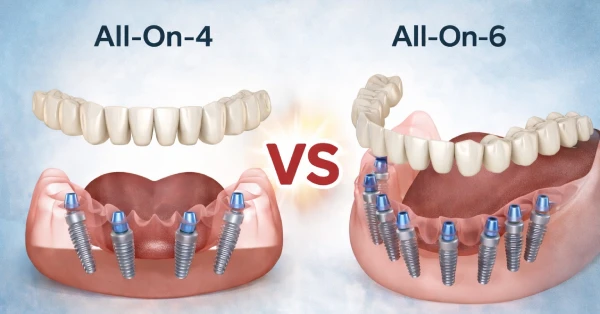
TL;DR All-on-4 vs All-on-6 Dental Implants
- All-on-4 uses four implants and often allows for faster treatment with fewer surgical steps.
- All-on-6 uses six implants for increased stability and better bite force distribution.
- All-on-4 may suit patients with lower bone density, while All-on-6 offers added long-term support.
- Both options restore a fixed, natural-looking smile.
- A consultation helps determine the right choice for your needs.
All-on-4 and All-on-6 are advanced full-arch dental implant solutions used to replace an entire set of missing teeth. The main difference is the number of implants usedAll-on-4 relies on four implants, while All-on-6 uses six for added support and stability. For patients considering dental implants in Washington, understanding this distinction helps determine which option best suits bone health, bite strength, and long-term goals.
What Are All-on-4 and All-on-6 Dental Implants?
Both All-on-4 and All-on-6 are full-arch restoration techniques that replace an entire upper or lower set of teeth using a fixed prosthetic supported by dental implants. The difference lies in the number of implants used and how the bite force is distributed.
- All-on-4 supports a complete arch with four implants.
- All-on-6 uses six implants for added stability and load distribution.
Each approach is carefully planned using advanced imaging and surgical precision to ensure long-term success.
5 Major Differences Between All-on-4 and All-on-6 Dental Implants
When comparing All-on-4 and All-on-6 dental implants, the differences go beyond the number of implants used. Factors such as stability, bone requirements, comfort, and long-term value play an important role in determining which option best fits a patients needs.
-
Number of Implants and Overall Support Structure
All-on-4 dental implants use four strategically angled implants to support a full arch of teeth, while All-on-6 relies on six implants placed across the jaw for additional anchorage. The benefit of using fewer implants with All-on-4 is a less invasive surgical approach and faster initial recovery, whereas All-on-6 offers added structural support that can enhance long-term durability for patients with stronger bite forces.
-
Stability and Bite Force Distribution
With four implants, All-on-4 concentrates chewing forces across fewer anchor points, which is highly effective for most patients. All-on-6 distributes bite pressure more evenly across six implants, reducing stress on each implant. This added stability can improve comfort while eating tougher foods and may contribute to longer prosthetic lifespan.
-
Bone Density Requirements and Preparation
All-on-4 is often recommended for patients with reduced jawbone volume because angled implants can bypass weaker bone areas, minimizing the need for additional procedures. All-on-6 typically requires greater bone density for proper placement, and in some cases, bone grafting in Washington may be recommended to strengthen the jaw and improve implant success. This flexibility allows treatment to be customized based on existing bone health.
-
Cost, Longevity, and Long-Term Value
All-on-4 generally has a lower upfront cost because it uses fewer implants and may avoid additional procedures. All-on-6 tends to involve a higher initial investment but can offer enhanced longevity and reinforcement over time. In both cases, patients benefit from a fixed, natural-looking solution that restores daily function, supports facial structure, and eliminates the inconvenience of removable denturesmaking either option a strong long-term investment for those considering dental implants.
-
Treatment Experience and Comfort
Both options are designed to streamline treatment compared to traditional single-tooth implants, but All-on-4 often involves shorter surgical time due to fewer implants. For patients who experience dental anxiety or are undergoing complex procedures, comfort-enhancing options such as sedation dentistry in Washington can help make the experience more relaxed and manageable, regardless of the implant type chosen.
Comparison Table: All-on-4 vs All-on-6 Implants
The table below highlights the key differences to help patients quickly compare both options.
| Feature | All-on-4 Dental Implants | All-on-6 Dental Implants |
|---|---|---|
| Number of Implants | 4 implants | 6 implants |
| Stability Level | High | Very high |
| Bone Requirement | Lower | Moderate to high |
| Force Distribution | Concentrated | More evenly distributed |
| Cost Range | More budget-friendly | Higher initial investment |
| Ideal For | Patients with limited bone | Patients seeking maximum support |
How to Decide Between All-on-4 and All-on-6
The right option depends on several factors, including jawbone health, bite strength, long-term goals, and overall oral condition. A personalized consultation with a qualified implant specialist is essential to evaluate imaging results, discuss expectations, and create a treatment plan tailored to your needs.
Conclusion
Both All-on-4 and All-on-6 dental implants offer reliable, life-changing solutions for patients seeking full-arch tooth replacement. While All-on-4 provides efficiency and affordability, All-on-6 delivers enhanced stability and long-term support. Understanding their differences empowers you to choose a solution that aligns with your oral health needs and lifestyle goalsensuring a confident, functional smile for years to come.
If youre considering All-on-4 or All-on-6 dental implants, the best way to decide is through a personalized evaluation. A professional consultation allows your oral surgeon to assess bone health, discuss comfort options, and create a treatment plan tailored to your long-term goals.
Schedule your dental implant consultation today at (202) 610 0600 and take the first step toward a confident, fully restored smile.





5 Stars
based on 11 reviews
5 Stars
based on 11 ratings